
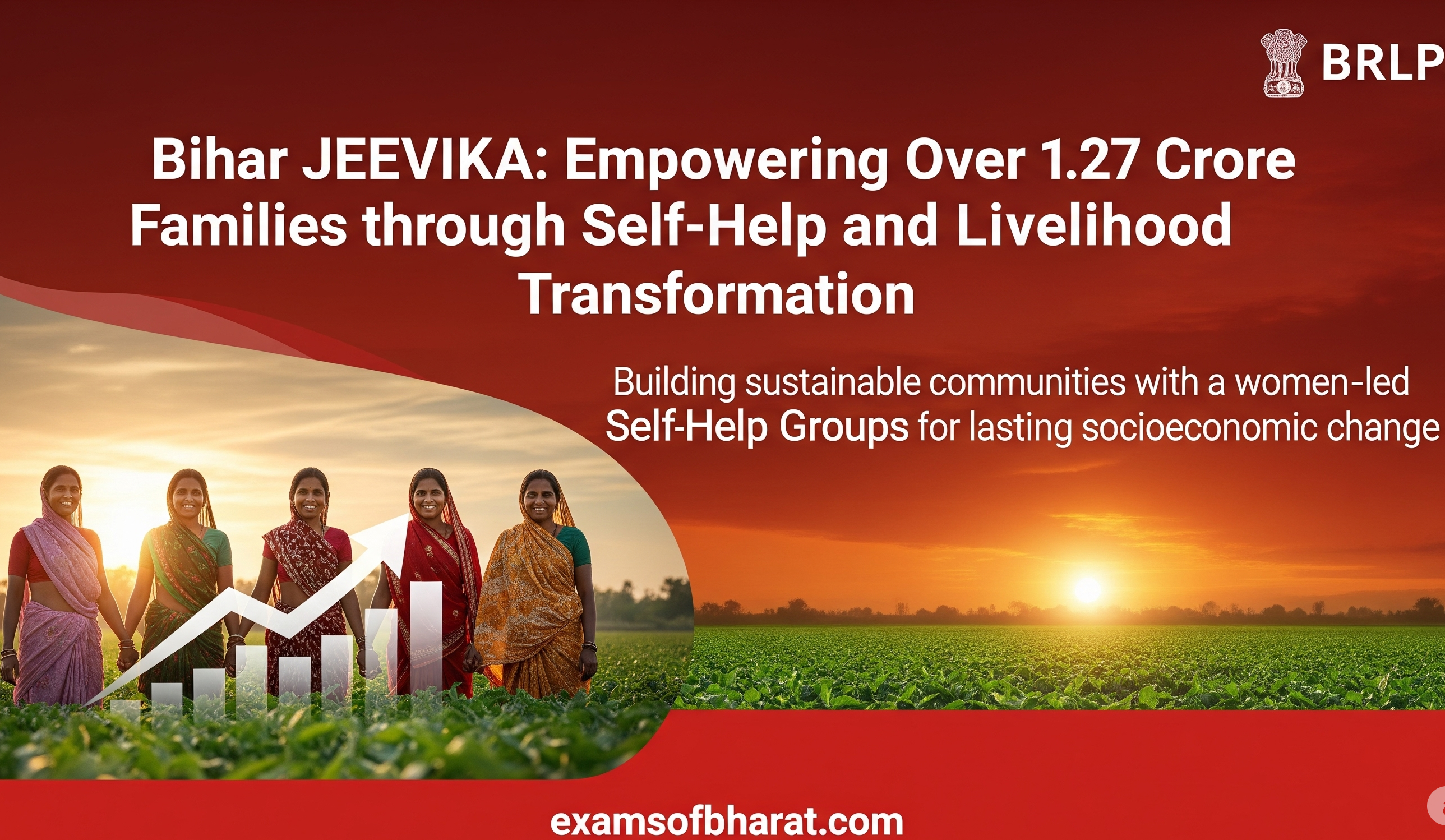
Bihar JEEViKA: Transforming Rural Livelihoods Through Empowerment
Overview of Bihar JEEViKA and Its Socio-Economic Mission
The Bihar Rural Livelihoods Project, popularly known as JEEViKA, is a transformative initiative by the Government of Bihar, supported financially by the World Bank. This program aims at the social and economic empowerment of the rural poor by building self-managed community institutions and promoting sustainable livelihoods. Operating under the Bihar Rural Livelihoods Promotion Society (BRLPS), JEEViKA has evolved over the past 15 years from a pilot project launched in 2006 into a wide-ranging movement now impacting over 1.27 crore families across the state.
The mission focuses on reducing rural poverty by facilitating Self-Help Groups (SHGs) that enable farm and non-farm income diversification, better financial inclusion, and alleviation of debt burdens from informal sources. The project also integrates components such as the Bihar Kosi Flood Recovery Project’s Livelihoods Restoration and Enhancement, highlighting its adaptive role in crisis contexts.
JEEViKA was designated in 2011 as the nodal agency for implementing the National Rural Livelihoods Mission (NRLM) in Bihar, which further strengthened its mandate to uplift rural communities by enhancing resilience, promoting collective action, and supporting diversified livelihoods. Its decade-long journey under NRLM Phase I and ongoing phases under the World Bank-supported Bihar Transformative Development Project emphasize a holistic approach to rural development anchored in empowerment and sustainability.
Key Components and Impact of JEEViKA’s Self-Help Groups
At the heart of JEEViKA’s success are Self-Help Groups (SHGs), which form the foundational community institutions where women from rural poor households come together to collectively address economic and social challenges. These SHGs facilitate peer support, pooled savings, and easier access to institutional credit at lower costs, thereby mitigating dependency on exploitative informal moneylenders.
The program's impact studies indicate significant positive shifts in economic behaviors, such as increased household income, improved savings rates, and expanded livelihood opportunities across agricultural and allied sectors. Beyond purely financial benefits, members report enhanced socio-cultural empowerment, with improved decision-making powers in household and community affairs.
Training and capacity building of SHG cadres, including mid-level managers, have been vital. While the project has achieved remarkable progress economically, challenges remain in areas like health awareness and integration of social welfare components. Enhanced focus on these areas is part of JEEViKA’s ongoing strategy to holistically improve rural livelihoods.
The approach of creating self-sustaining community institutions reinforces durable socio-economic transformation, enabling members to collectively develop and implement strategies tailored to local needs.
How to Engage with Bihar JEEViKA: Registration and Participation
Engagement with JEEViKA is accessible to rural poor families primarily through enrollment in Self-Help Groups facilitated by the Bihar Rural Livelihoods Promotion Society (BRLPS). The process includes online form submissions and rigorous verification steps to ensure applicant data accuracy.
The YouTube tutorial videos offer step-by-step guidance on filling the Bihar JEEViKA online application form for the year 2025. Applicants must carefully review and verify their personal information, including uploading required documents such as photographs and signatures before final submission.
This digital facilitation streamlines participation and enhances transparency, enabling more rural households to benefit from JEEViKA’s poverty alleviation programs. Continued support from both governmental agencies and international partners like the World Bank ensures evolving services aimed at comprehensive empowerment.
For prospective applicants and researchers, accessing official resources at BRLPS’s website provides authoritative information on program updates, project reports, and further participation details.